Bigfoot Clipart Vector Sublimation Review
As a designer who spends half my life staring at stitch charts and the other half worrying about whether a customer’s sweatshirt will hold up after ten washes, I don’t just look at an embroidery design; I look at its potential. When I first pulled Bigfoot Clipart Vector Sublimation into my digitizing software, I wasn’t immediately thinking of high-end fashion. Instead, I was thinking about that specific moment in a craft shop where someone needs a quirky, conversation-starting gift that doesn’t look like it was stamped out by a mass-production machine.
This is a digital product, which means the value lies entirely in how you translate these vector graphics into tangible thread. The file comes as a ZIP folder ready to print or convert, but for us in the embroidery world, the real test isn’t the pixel resolution—it’s the stitch clarity. Here is my practical breakdown of how this design performs when moving from screen to fabric.
The First Impression: Mood and Visual Personality
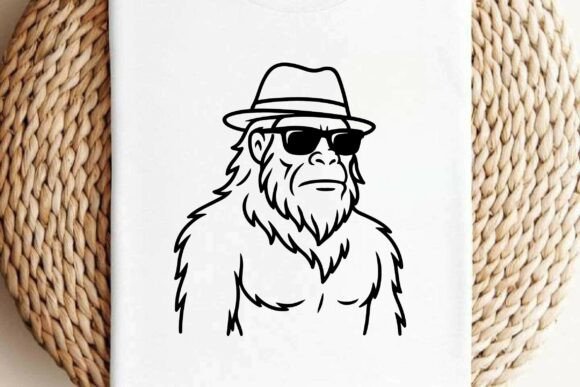
The immediate takeaway from Bigfoot Clipart Vector Sublimation is its boldness. In the world of custom apparel, subtlety often gets lost, especially on textured fabrics like fleece or heavy cotton canvas. This design has a visual weight that demands attention without relying on excessive complexity. It feels grounded, slightly rustic, yet modern enough to fit into a contemporary boutique aesthetic.
When I zoomed in to check the line work, I appreciated the clean vectors. For a machine embroidery design, clean lines are everything. They translate directly into crisp satin stitches or precise fill areas. There is no messy clutter here that would result in tangled thread or confused stitching paths. The mood is playful but not childish. It strikes a balance that makes it suitable for a wide range of demographics, from teenagers looking for unique sweatshirt embroidery ideas to adults who appreciate a good piece of folklore-inspired decor.
Real-World Application: Where Does This Design Shine?
I’ve taken this concept through several mental simulations of actual production runs. Let’s talk about where Bigfoot Clipart Vector Sublimation truly excels.
- Tote Bag Designs: Canvas tote bags are a staple for any craft business. The sturdy fabric can handle the density of this design beautifully. Imagine a simple black tote with the Bigfoot graphic centered in contrasting earth tones—forest green, charcoal, and cream. It becomes an instant statement piece for hikers or nature lovers.
- Sweatshirt Embroidery: Nothing says "cozy" like a well-executed embroidered hoodie. Because this is a vector-based graphic, scaling it up on a chest pocket or a full-back placement looks professional. It avoids the "cheap clipart" look that plagues many low-quality embroidery files.
- Embroidered Patches: If you are selling accessories, turning this into a sew-on or iron-on patch is a smart move. The strong outline of the clipart lends itself perfectly to a thick border, creating a distinct badge-like appearance that adds perceived value to a handmade product.
- Kitchen and Home Decor: Don’t overlook tea towels or pillow covers. A subtle, tonal embroidery of this design on a beige linen napkin set creates a sophisticated, thematic touch for holiday gifts or housewarmings.
For an Etsy seller or small shop owner, versatility is key. This design allows you to cross-promote across categories. You can list it under "Novelty Gifts," "Outdoor Enthusiast Merchandise," and "Custom Apparel" simultaneously, maximizing your visibility without needing multiple unique designs.
Technical Considerations and Stitch Quality
While the visual appeal is strong, we must address the technical side of digitization. Even the best vector art can fail if the stitch density is off. When converting Bigfoot Clipart Vector Sublimation, pay close attention to the following:
- Stitch Density: Ensure the fill stitches aren’t too dense. On stretchy fabrics like jersey knit, excessive density can cause puckering. If you are using this for baby embroidery or delicate items, consider reducing the stitch count per square inch to keep the fabric soft and comfortable.
- Thread Colors: The contrast is vital. On dark fabric, use light threads for the main body of the design to ensure the details pop. Conversely, on light fabric, darker threads provide definition. Always test your thread colors against your actual fabric swatch before committing to a full run.
- Hoop Size: Verify that the final digitized size fits comfortably within your standard hoop sizes. If the design is too large, you may need to split the embroidery, which can leave visible seams. Check the dimensions carefully to avoid mid-project frustration.
Also, consider the stabilizer. For heavier applications like denim caps or thick aprons, a cut-away stabilizer is non-negotiable to maintain structural integrity over time. For lighter projects, a tear-away might suffice, but always err on the side of extra support to protect your reputation for quality.
Where to Use Caution
Not every surface is created equal. There are scenarios where Bigfoot Clipart Vector Sublimation might struggle:
- Small Hoop Sizes: If you attempt to embroider this on a tiny accessory like a mousepad or a small coin purse, fine details may get lost. The intricate parts of the clipart need room to breathe. Stick to medium to large placements for maximum impact.
- Textured Fabrics: While it works on canvas, highly textured fabrics like bouclé or heavy sherpa can hide the nuances of the design. The needle might struggle to penetrate evenly, leading to skipped stitches. Smooth fabrics yield the most consistent results.
- Curved Surfaces: Embroidering on the curved crown of a cap requires advanced technique. If the design has straight lines, they may distort visibly on a curve. Test this on a scrap piece of cap material first to see if the geometry holds up.
Impact on Brand and Customer Trust
In the digital age, presentation is everything. When you sell a personalized gift or a custom apparel item, the buyer is investing in your taste. Using a high-quality vector source like Bigfoot Clipart Vector Sublimation signals professionalism. It shows you care about the source material, not just the output.
Furthermore, this design has strong giftability. It’s recognizable, fun, and universally understood. Customers often buy embroidery products as gifts because they feel more thoughtful than store-bought alternatives. A well-stitched Bigfoot design on a premium hoodie feels personal and curated. This emotional connection drives repeat business and positive reviews.
However, remember that a printable mockup is only as good as the real thing. Ensure your photos accurately represent the texture and depth of the embroidery. Over-smoothing images can lead to disappointed customers if the physical finished product looks different. Transparency builds trust.
Final Verdict for the Creative Entrepreneur
Bigfoot Clipart Vector Sublimation is a solid addition to any digital embroidery file library. It offers a blend of whimsy and strength that appeals to a broad audience. Whether you are creating commercial embroidery pieces for a local shop or designing holiday embroidery collections for online sales, this asset provides a reliable foundation.
My advice? Treat it as a versatile tool. Test it on various fabrics. Experiment with different applique design techniques if you want to add dimension. Use it for design assets in your own creative projects, ensuring you adhere to the licensing terms provided in the ZIP folder. Remember, this is a digital product—you won’t receive a physical item, so your ability to digitize and execute is paramount.
If you are looking to add a touch of mystery and adventure to your small shop product lineup, this design delivers. It’s practical, visually engaging, and ready to be transformed into something customers will love to wear or display. Just remember: always test on scrap fabric first, check your tension, and let the quality of your stitching speak louder than the design itself.